


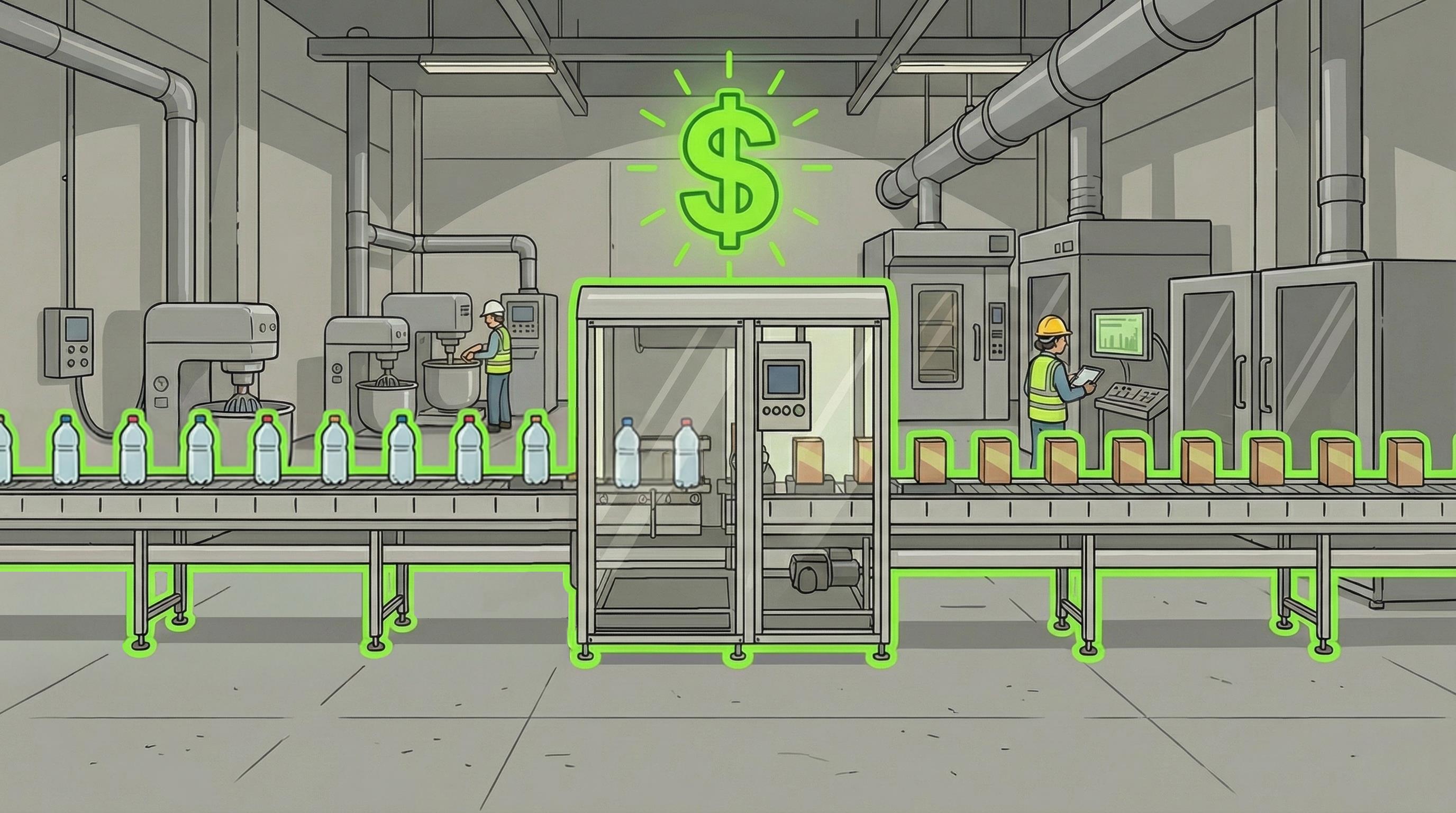
In modern industry, where machinery often represents the largest share of capital investment, understanding the real economic value of physical assets is not just an accounting exercise—it is a strategic necessity. Decisions regarding maintenance, replacement, insurance, mergers, or even the sale of a production line hinge on the ability to determine whether equipment is truly worth what the books say it is. Too often, organizations rely solely on financial depreciation schedules that may have little connection to the actual condition or productivity of an asset. A machine can be fully depreciated in accounting terms and yet continue delivering value in production—or conversely, it can lose economic viability long before the end of its scheduled life due to technological obsolescence.
This is where technical asset valuation emerges as an indispensable discipline in asset management. By combining engineering expertise, operational knowledge, and financial analysis, asset valuation offers a structured method to establish the fair, defensible value of industrial equipment. Unlike pure financial assessments, it acknowledges real-world conditions: wear, performance, safety, market demand, and external regulations.
This article presents the comprehensive methodology for valuing industrial assets, clarifies its relationship with Life Cycle Costing (LCC), and closes with a practical case study: the valuation of a Packer Douglas KDCP 24 machine in the bottling sector. The case illustrates step by step how technical inspection, depreciation, and market analysis converge to define a reliable fair market value.
Why Technical Valuation Matters
The valuation of physical assets is critical for several reasons. In accounting and finance, it allows companies to restate financial statements according to IFRS or IAS standards, ensuring transparency for investors and auditors. In insurance, it defines the basis for premiums and compensation in case of loss. During mergers, acquisitions, or asset spin-offs, valuation supports negotiations by clarifying the economic reality behind the balance sheet.
But perhaps most importantly, technical valuation supports asset management decisions: should a machine be refurbished, replaced, or sold? Should capital be allocated to new technology, or does extending the useful life of an existing asset deliver better returns?
To answer these questions, valuation requires a multidisciplinary approach. It integrates maintenance engineering (to understand condition and performance), financial modeling (to calculate depreciation and value projections), and market intelligence (to benchmark against similar assets in the secondary market). The result is not only a number, but also a defensible narrative explaining how that number was derived.
Methodological Framework
A structured technical valuation follows eleven steps, each adding rigor to the final result:
- Technical Identification: Definition of the asset’s type, brand, model, serial number, manufacturing year, and valuation purpose.
- Physical and Operational Inspection: Assessment of wear, damage, safety features, and operational response.
- Document Review: Collection of invoices, manuals, maintenance logs, and usage records.
- Acquisition Value: Reconstitution of purchase and installation costs.
- Depreciation Modeling: Application of appropriate depreciation methods (e.g., straight-line, units-of-production, accelerated methods).
- Secondary Market Analysis: Benchmarking with similar assets in auctions, resale, or supplier quotes.
- Residual Value Estimation: Value of scrap or reusable components at end of life.
- Functional and Productive Evaluation: Analysis of energy efficiency, availability, and productivity.
- External Factors: Consideration of regulatory compliance, obsolescence risk, and market trends.
- Valuation Report: Structured document with evidence, calculations, and assumptions.
- Validation: Peer review or external appraisal to strengthen credibility.
Valuation vs. Life Cycle Costing
Though related, asset valuation and Life Cycle Costing (LCC) serve different purposes. Valuation determines the current economic worth of an asset, providing a snapshot at a given time. LCC, in contrast, projects the total cost of ownership from acquisition to disposal, including operation, maintenance, and retirement costs.
The two approaches complement one another: valuation often feeds residual value into LCC models, while LCC informs valuation by clarifying expected future costs. Together, they provide a holistic view of asset economics, supporting both tactical and strategic decisions.
Key Differences
| Aspect | Asset Valuation | Life Cycle Cost (LCC) |
|---|---|---|
| Purpose | Determine the economic value of the asset. | Calculate the total cost of ownership. |
| Temporal Focus | Current moment or residual value. | The entire useful life of the asset. |
| Factors Considered | Physical condition, market, depreciation. | Acquisition, operation, maintenance, and disposal costs. |
| Result | Economic value of the asset. | Accrued costs associated with the asset. |
Applied Case: Valuation of a Douglas KDCP 24 Packer
To ground the methodology, let’s walk through the valuation steps for a real case from the food industry: the valuation of a Douglas KDCP 24 packing machine, installed in 2018 in bottling plant. After six years of operation, the company is considering selling it. What is its fair, real value to the company?
Step 1: Asset Identification
- Asset: Packing machine
- Brand/Model: Douglas KDCP 24
- Year of Manufacture: 2018
- Location: Bottling production facility
- Valuation Objective: Define real value for use in maintenance and reliability strategies
Step 2: Physical and Operational Inspection
The physical inspection reveals:
- Conveyor belts show moderate wear.
- Paint faded due to environmental exposure.
- No structural cracks or corrosion observed.
- Operationally, the machine functions, though there is a slight delay in the automatic cycle.
- Safety guards and sensors are functional and compliant.
Result: Overall Functional Technical Condition Index (FTCI): 85/100 (Good).
Step 3: Document Review
Purchase invoice confirms acquisition at $150,000 USD in 2018.
Installation and transport costs amounted to $8,000 USD.
Total acquisition value: $158,000 USD.
Maintenance history: belts replaced in 2020 and 2022; annual inspections carried out.
Usage records: ~8 hours/day operation, five days a week.
Step 4: Depreciation Calculation
The company estimates a useful life of 10 years and a residual value of $15,000 USD.
Chosen method: Straight-line depreciation.
Formula:

Substitution:

After six years of use:

Thus, based on accounting depreciation, the machine’s value is $72,200 USD.
Step 5: Market Evaluation
A review of secondary markets shows comparable Douglas KDCP 24 units from 2018 sell for between $60,000 and $75,000 USD, depending on condition and maintenance history. Adjusting the comparable range using the Functional Technical Condition Index (FTCI score was 85/100), the lower bound is increased and the upper bound is slightly moderated to reflect condition. Doing so reveals that a realistic market range is between $68,000–$72,000 USD.
Step 6: Residual Value Projection
At the end of 10 years, the expected residual value remains $15,000 USD, reflecting a potential for salvage or parts resale.
Step 7: Functional Evaluation
The machine continues to meet production needs, though efficiency has dropped slightly (95% relative to a new unit). Maintenance costs average $2,000 USD/year, which is still manageable. However, newer models offer 20% lower energy consumption and higher throughput, suggesting some technological obsolescence.
Step 8: External Factors
The machine complies with current safety regulations. However, energy efficiency standards in future years may accelerate depreciation if regulations tighten or energy costs increase.
Step 9: Final Valuation Report
By integrating depreciation analysis, market evaluation, and condition factors, the estimated fair market value is set at $70,000 USD.
Summary of Calculations:
- Acquisition cost: $158,000 USD
- Annual depreciation: $14,300 USD
- Book value after 6 years: $72,200 USD
- Market comparison range: $68,000–$72,000 USD
- Final fair market value: $70,000 USD
The report includes photos, maintenance logs, calculation sheets, and justification of assumptions.
Broader Implications
This case highlights how technical valuation bridges the gap between financial depreciation and market reality. A purely accounting-based approach would yield a value of $72,200 USD, but market benchmarking refines the estimate to $70,000 USD—a difference that can be decisive in negotiations.
For the selling company, this valuation ensures it neither undervalues its equipment nor sets unrealistic expectations. For the buyer, it provides transparency on condition and productivity. In both cases, valuation supports fair, evidence-based decision-making.
Conclusions
Technical valuation is more than an accounting formality; it is a strategic tool that aligns engineering, finance, and operations. By applying a structured methodology, organizations can:
- Optimize investment decisions.
- Justify technological renewals or extensions of life.
- Support financial, tax, and insurance requirements.
- Benchmark performance and condition against modern standards.
When combined with Life Cycle Costing (LCC), Reliability-Centered Maintenance (RCM), Total Productive Maintenance (TPM), and other reliability/asset management frameworks, proper valuation contributes to a comprehensive asset management system. Ultimately, knowing the correct value enables making the correct decision—whether to renew, replace, or divest an asset.
In industries where margins are tight and capital is high, the ability to accurately determine asset value is no longer optional. It is a competitive advantage.